
Why your Apple Watch treadmill distance is wrong, and what fixing it takes
One late night I did a 45-minute zone 2 run on a treadmill. I set the belt to 10 km/h, with five minutes of walking at 6 km/h before and after, and when it finished, it showed 8.54 km. My Apple Watch had recorded 6.21 km. The belt was right, and I had the legs to prove it, but the run in my history was more than two kilometres short, and its average pace was 8:53 per kilometre for a session that was 6:30.
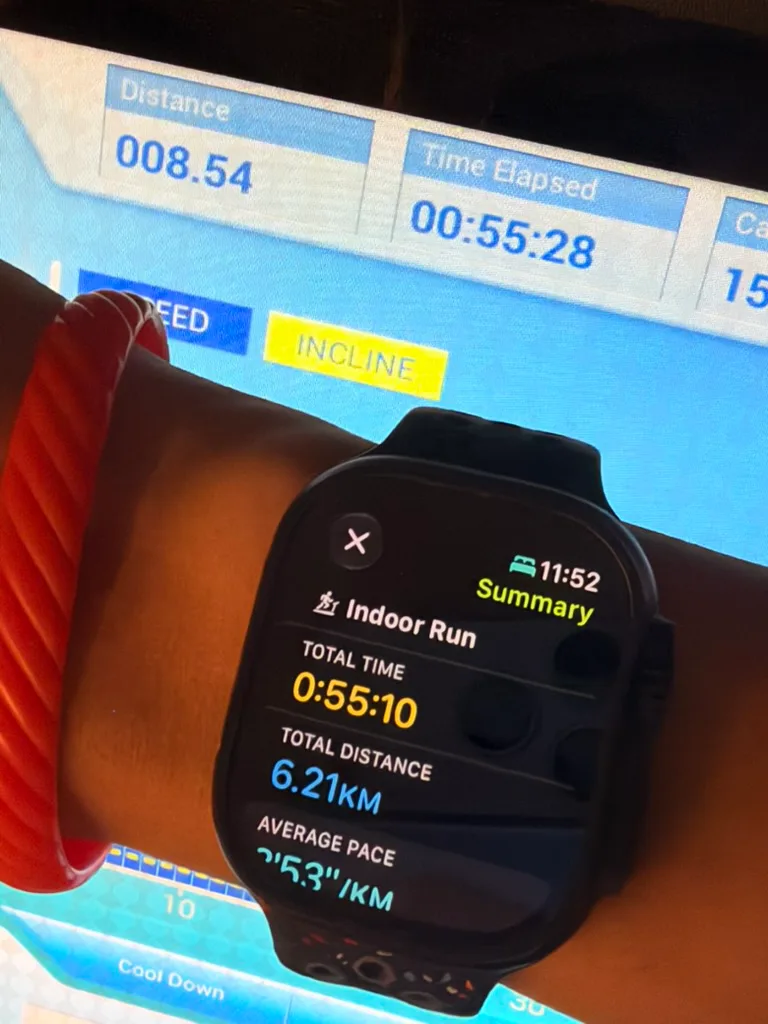
I build ZephyrRun, an app that analyses Apple Watch runs, so a wrong run is my problem twice over. This note is what I learned about why it happens and what a correction has to do.
Why the watch is off indoors
Outdoors, an Apple Watch measures distance with GPS. On a treadmill there is no GPS to use, because you aren’t going anywhere. The watch has to estimate distance from how your arm moves.
Apple explains what that estimate rests on. Outdoor walks and runs teach the watch “your stride length at different speeds”, and Apple suggests about 20 minutes outdoors at each speed you train at. Indoors, the watch applies what it learned.
That works until your treadmill running differs from your outdoor running. A shorter stride on the belt, a wrist resting on the treadmill, a speed you never run outside: each one moves the estimate. Across my own treadmill runs the watch has recorded between 8% and 27% less than the belt showed.
watchOS 27 set out to improve treadmill distance. I’ve been on watchOS 27.2 for days and it’s still not very accurate. I think it’s because I haven’t run outdoors in months.
Calibrating outdoors helps and is worth doing. It doesn’t correct a run you have already recorded.
The usual fix: correct the total
The common fix is to enter the distance the treadmill showed. ZephyrRun has done this since its first release: you give it the belt’s total, and it stretches the run to match. The total is now right, and so is the average pace.
That matters. A wrong total is a wrong week, and a slow average pace sits in your history beside runs it shouldn’t be compared with.
Where a single stretch falls short
A stretch multiplies every minute of the run by the same number. That is only right if the watch was wrong by the same amount all the way through. It usually isn’t. Walking is one stride and running is another, and the watch learned them separately.
Take that night’s three parts: the warm-up walk, the 45 minutes of running, and the cool-down walk. Here is what the watch recorded for each, and what stretching the whole run to 8.54 km does to it:
| Part | Belt | Watch | After the stretch |
|---|---|---|---|
| Warm-up, 5 min | 6.0 km/h | 3.7 km/h | 5.1 km/h |
| Run, 45 min | 10.0 km/h | 7.5 km/h | 10.3 km/h |
| Cool-down, 5 min | 6.0 km/h | 3.1 km/h | 4.3 km/h |
| Total | 8.54 km | 6.21 km | 8.54 km |
The watch was short in every part, by a different amount each time: 38% in the warm-up, 25% in the run, 48% in the cool-down. I think the cool-down reads lowest mostly because my wrist was resting on the treadmill.
The stretch has one number to apply, 1.375, and it suits none of the three. The total is right. The run now reads 5:49 per kilometre when it was 6:00, faster than I ran it. Both walks are still too slow.
For a run at one speed from start to finish this hardly matters. For anything with a warm-up, a cool-down, a walk or intervals in it, every part is wrong in its own direction. Splits, the pace of each part, and any comparison with last month’s session are built from those minutes, and they carry the error with them.
What a full fix needs
To correct each part by its own amount, an app first has to know where the parts are. ZephyrRun already finds them: the warm-up, each stretch of running, each recovery and the cool-down, in every run, without being told. That is free, and it is how the app reads a run in the first place.
Once the parts are known, the rest is small: say what the belt was doing in each one. That is coming in the next update.
References
- Apple Support, “Calibrate your Apple Watch for improved Workout and Activity accuracy”, 10 March 2026.
- TechRadar, “The latest Apple Watch update promises better-than-ever treadmill workout tracking”, 30 October 2026.